
Guide
Seasonal HVAC Maintenance Tips for Virginia Homeowners
A season-by-season HVAC maintenance routine for Virginia homes, with the spring and fall work that stops most no-heat and no-cool calls before they start.
By the Editors · Northern Virginia Home Comfort
Almost nothing that gets called an HVAC emergency arrived suddenly. It was two or three skipped years of small work, compounding quietly, until an August afternoon or a January cold snap finally pushed a tired part over the line. The failure feels abrupt because that is when you first noticed it.
Virginia asks a lot of a system. Months of humid running on the cooling side, real cold on the heating side, and two shoulder seasons that make the equipment flip modes several times a week. This guide walks that year in order. What you can do with your own hands, what needs a technician and a set of gauges, and roughly when each piece should happen. The whole plan comes down to two real service windows bracketing the two hard seasons, with filter discipline and a bit of attention in between. Get that right and most of the expensive surprises simply stop arriving.
You are fighting humidity at least as hard as heat
A cooling system in a dry climate mostly moves temperature around. Here it spends June through September wringing water out of the air, hour after hour, and that second job is what wears things down. Condensate drains clog. Coils foul. The blower runs longer than the thermostat reading alone would suggest.
The heating side gets its own version of that. Cold snaps run a furnace or heat pump hard for weeks at a stretch, and the shoulder seasons add constant mode switching on top. Then there is the housing stock. A good share of homes around Fredericksburg were framed long before anyone specified the ductwork now threaded through them, so the equipment is often working against a duct system it was never matched to.
You can feel the consequence before any gauge reports it. Air out of a supply register that feels moving but not cold. A hallway that stays a few degrees off from the room with the thermostat in it. A unit that runs and runs without the house ever quite catching up. Set-and-forget does not survive this climate. The systems that reach fifteen or twenty years are the ones somebody looked at twice a year, every year, without waiting for a symptom to ask.
You get two windows a year, and spring is the first one
April into early May is the cheap window. Parts are on the shelf, technicians have open mornings, and nothing has failed yet. By the first real heat wave, every one of those advantages is gone.
You can handle four of these yourself
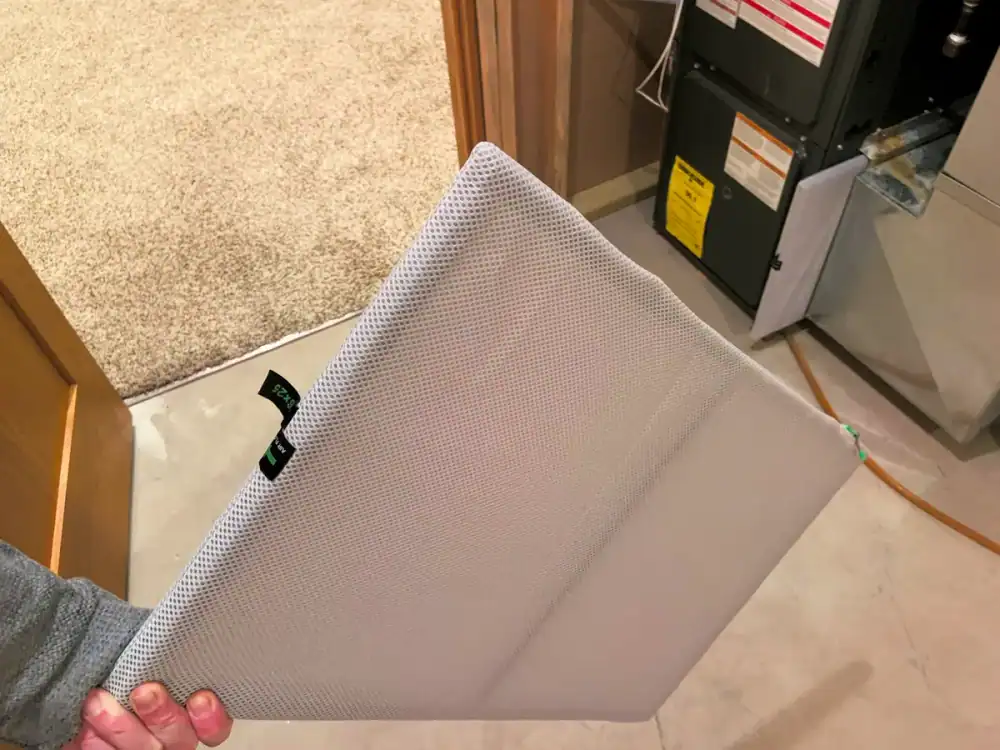
- Change the filter, then start checking it monthly through cooling season. A one-inch filter often wants replacing every one to three months; a thick media filter runs longer. A choked filter is the single most common cause of weak airflow and an iced coil, and it is the cheapest thing on this page.
- Clear the outdoor condenser. Cut plants back to a foot or two of clearance and rinse the fins gently with a hose, working from the inside out. Kill power at the disconnect first, and mean it.
- Find the condensate drain line and confirm water moves through it. A sluggish drain on a humid day backs up, trips a float switch, or puts water on the floor near the indoor unit. A little of the right cleaner now prevents a mess in August.
- Run the cooling through a full cycle on a mild day. If it is slow, loud, or smells wrong, you have found the problem while somebody can still come look at it this week.
You need a technician for the rest
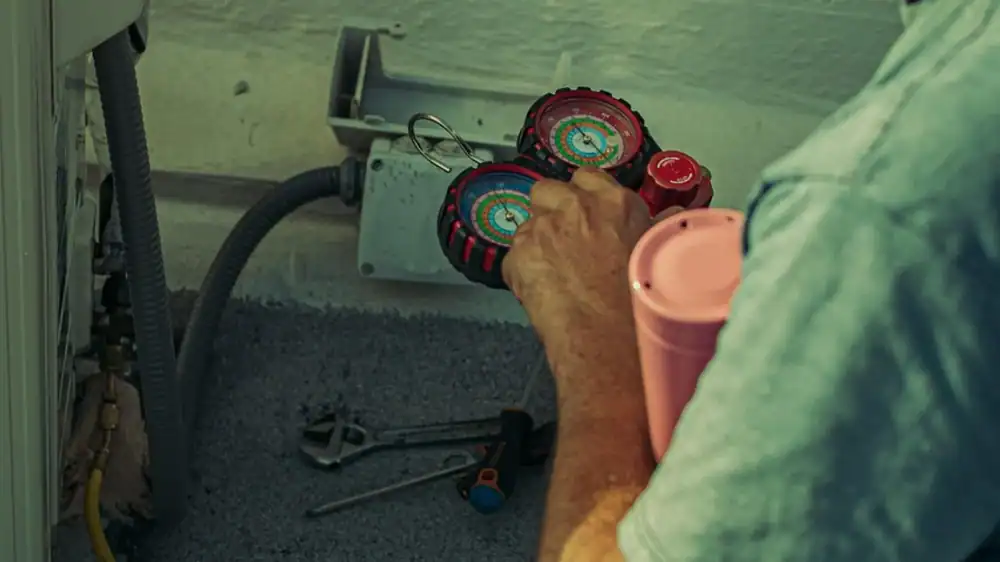
A spring visit should cover refrigerant charge, an electrical check of the capacitor and contactor, and a look at the coil and blower. Refrigerant is not a homeowner job in any sense. A system that is low is a system with a leak, and topping it off without finding that leak is paying to lose the same gas again. From the reader side, the choice often turns on whether the task needs gauges. If it does, it is not a weekend project.
While you are thinking in seasons, it is worth noticing how much of local life already runs that way. Neighbors plan around the local recreation department and the calendars behind it, and the same habit of looking a month ahead is exactly what gets a tune-up booked on a Tuesday morning instead of during the scramble after the first ninety-degree weekend.
You switch from working to watching once the heat lands
Summer maintenance is short. Check the filter monthly. Keep grass clippings and leaf litter off the outdoor unit. Then pay attention, because the early warnings are all things a homeowner can catch without a tool.
Weak air at the registers. Air that is moving but not cold. A system that never reaches setpoint on a hot afternoon. Water pooling near the indoor coil. Any of those means shut it down and call, rather than pushing it. Running a struggling system hard is the standard route from a modest repair to a compressor.
One more habit worth keeping: put a hand near the return grille and near a supply register on the same pass. If one feels strong and the other feels thin, the problem is usually air, not refrigerant, and air problems are the ones you can sometimes fix yourself.
You turn the whole routine around in September
When the cooling season winds down, the work flips. Fall service, done in September or October, is what keeps the heating side honest through winter.
You have four tasks of your own
- Change the filter again heading into heating season, regardless of how it looks.
- Pull furniture and rugs off vents and returns so the system can move air at all.
- Test the heat on a cool day, well before you need it. A furnace that sat idle all summer often burns dust off with a brief odor on the first run, and that is normal. A burning-plastic smell or repeated short cycling is not.
- Replace thermostat batteries and set a schedule that matches how the house is really used, not how you imagined using it in March.
You need trained eyes on the combustion side
A fall visit covers burners or heat strips, the heat exchanger, the flame sensor, and the safety controls. On a gas furnace a cracked heat exchanger is a safety question before it is a comfort one, and catching it takes experience. On a heat pump, fall is when somebody should confirm the reversing valve and defrost cycle behave before the cold arrives. With that context, the working test is whether the system starts cleanly, holds temperature, and shuts down without drama.
You mostly stand guard through the winter
Winter work is vigilance more than labor. Keep the filter fresh. Keep supply and return vents clear. Keep snow and ice off an outdoor heat pump so it can breathe and run its defrost cycle.
If the heat struggles during a hard freeze, resist pushing the thermostat far above where you want it. That almost never heats faster, and on a heat pump it forces backup strips that will show up on the bill. Listen for new noises and watch for short cycling. A small fault caught in December costs a fraction of the same fault during the coldest week of the year, when every technician in the region is already booked.
You should know where the permit line sits
Filters and tune-ups are routine. Larger work is not. Replacing equipment, altering ductwork, or changing a fuel connection can require a permit and an inspection, and those rules are set locally rather than nationally. Before a project of that size, read the Fredericksburg city code and ask your contractor plainly who is pulling the permit. A reputable outfit treats that as ordinary. An outfit that skips it can leave you with a problem that only surfaces at resale, which is the worst possible time to find it.
You have to treat a heat pump on its own terms
Plenty of homes here run heat pumps rather than gas furnaces, and a heat pump both heats and cools, so it works close to year round. That extra runtime is exactly why the twice-a-year checkups matter more, not less.
In winter it runs a defrost cycle to shed ice from the outdoor coil. Brief steam or a pause is usually normal. What is not normal is a unit buried in snow, packed with leaves, or leaning on its backup strips constantly. Keep clearance around it all year, and each fall ask the technician to confirm the reversing valve, defrost control, and auxiliary heat are all behaving. A heat pump falling back on strips too often will inflate a winter bill while appearing to work fine, and that is a failure you read on a statement rather than feel in a room.
You can carry the entire year in four lines
- Spring: change the filter, clear and rinse the condenser, check the drain line, book the cooling visit.
- Summer: check the filter monthly, keep the outdoor unit clear, watch airflow, noise, and water.
- Fall: change the filter, test the heat early, book the heating visit.
- Winter: check the filter, keep vents and the heat pump clear, listen for anything new.
Tape that inside a cabinet door and the year largely handles itself. Households that avoid breakdowns are rarely the ones with the newest equipment. They are the ones that kept this dull little rhythm without waiting to be reminded. The same municipal record-keeping habit shows up all over the region, from the city's history corner to a homeowner's own service folder, and the folder is the one that saves you money.
You save the most by being boring, on schedule
Seasonal maintenance is unglamorous work, and that is precisely why it works. Two service windows a year, monthly filter checks, and the habit of noticing airflow, noise, and drainage will head off most of what homeowners dread.
The line is clear enough. When a task moves past filters and clearances into refrigerant, gas, or electrical work, stop. Crossing it yourself usually costs more than it saves, and sometimes considerably more. At that point, professional hvac service fredericksburg va is the right call, and a standing relationship with one local contractor means the tune-ups get scheduled rather than remembered. Do the small things on time and the large things mostly stop happening.
A comfortable home isn't the biggest system — it's the right one, cared for well.
From the editors