
Guide
How to Improve Home Heating Efficiency in Fredericksburg
Where older Fredericksburg houses lose heat, which fixes pay back fastest, and how to rank air sealing, insulation, ducts, and equipment in the right order.
By the Editors · Northern Virginia Home Comfort
Most homeowners who want a warmer, cheaper winter start by shopping for a furnace. That is the last step, not the first. A high-efficiency system bolted into a leaky house simply pays more carefully for heat that still walks out through the attic hatch.
The sequence that works runs the other direction. Stop the air you are losing, then insulate what is left, then make the ducts carry what the equipment already produces, then change how the system is run, and only after all of that talk about replacing it. What follows walks that order for the housing stock around Fredericksburg, which is a mix of genuinely old frame houses, mid-century brick, and newer builds pushed out toward Spotsylvania and Stafford. Each loses heat in its own way. The order of operations does not change.
You lose heat in four places, and the furnace is the fourth
Heat leaves a house by riding moving air, by conducting through cold surfaces, and by being delivered somewhere nobody is standing. Equipment efficiency sits underneath all three, which is why starting there is backwards.
You feel the leaks before you ever find them
Walk the house on the first genuinely cold evening with a hand out. Nearly all of the information is at skin level. Cold spilling down a stairwell means something above is open. A band of chill along a baseboard on an exterior wall usually means the rim joist below it was never sealed. A draft across your ankles at a closed door is weatherstripping gone hard and stopped pressing. A room that reads colder than the thermostat claims is either a duct problem or an insulation problem, and the sections below will sort out which.
Do that walk before spending anything. Twenty minutes of paying attention with your hands points at more money than an afternoon of reading product pages.
You can find the rest with a smoke pencil and a flashlight
The leaks you cannot feel are hidden by design. Attic hatches, recessed light housings, plumbing and wiring penetrations, the top plate of interior walls, and the chase around a chimney are the usual set. A stick of incense held near any of those on a windy day will show the air moving. In an unfinished basement, look up instead: the rim joist runs the whole perimeter and is frequently open framing.
Older houses here tend to have several of these at once, because they went up before anyone treated a building shell as a system. That is history rather than defect, and it means the cheap fixes are still on the table, which is not true of a tight modern build.
You should rank every fix by payback, not by sticker price
Cost alone ranks badly. What matters is money saved per dollar spent, and on that measure the list is stubbornly consistent.
- Air sealing. A few hundred dollars of caulk, foam, weatherstripping, and labor, and it typically moves a winter bill further than anything else on this page.
- Attic insulation. Moderate cost, longer payback, but a dependable one, and it makes the sealing underneath it work properly.
- Duct sealing and balancing. Routinely skipped, and occasionally the single largest loss in a house with ducts running through an unconditioned attic or crawlspace.
- Thermostat behavior. Free. Genuinely free, and worth real money when the current schedule is a dial somebody nudges twice a day.
- Equipment replacement. Highest cost, longest payback, and the only item on the list that gets sold to you unprompted.
Hold onto that ordering, because commercial pressure runs in precisely the opposite direction.
You get the most from stopping air first
Air sealing is unglamorous and effective. Work top down, since warm air leaves high and pulls cold in low to replace it.
Start at the attic plane. Seal around the hatch and weatherstrip it, box and seal recessed housings rated for that treatment, and foam every wire and pipe penetration within reach. Move next to the basement or crawlspace and seal the rim joist perimeter. Finish with doors and windows, which attract most of the attention and deliver the least of the three.
The economic history of the region is easy to trace through the regional economic development office, and it explains part of the pattern in local houses: construction came in waves, decades apart, under very different assumptions about how tight a shell needed to be. If you know roughly when your house was framed, you can usually guess which leaks it has before you go looking. Trades working here compare notes through the regional chamber of commerce, and a good contractor will place your house in its era within about five minutes of walking it.
You are probably short on attic insulation, and that is where depth counts
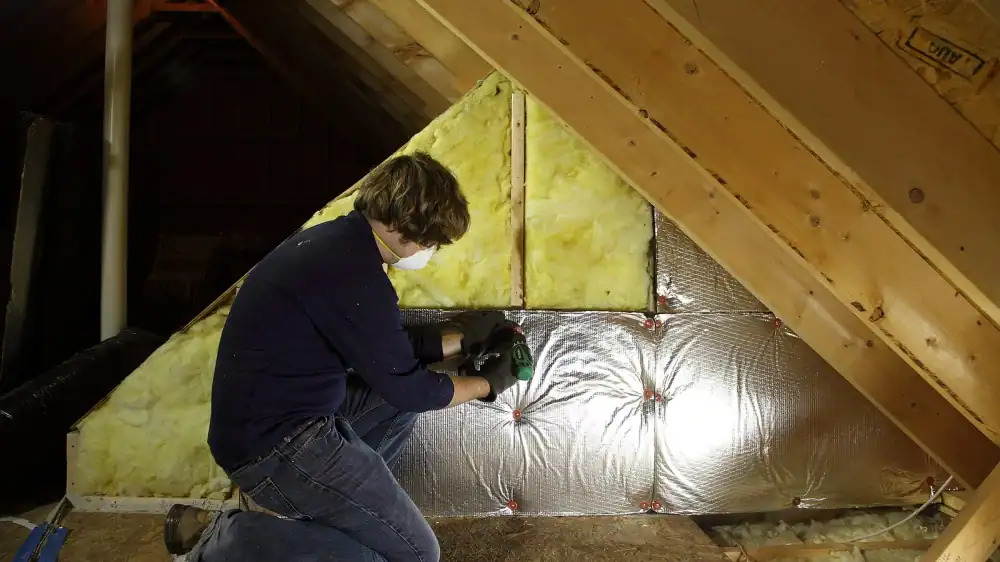
Plenty of older homes in this area sit somewhere between four and eight inches of settled attic insulation. Current practice is considerably deeper. Insulation is rated by R-value, and depth is the honest proxy for it when you are balanced on a joist with a tape measure.
Add insulation after sealing, never before. Blowing a foot of loose fill over open penetrations buries the leaks without stopping them, and you will have paid to put the real problem out of reach. Keep the material clear of soffit vents so the roof still breathes, and do not bury recessed fixtures that are not rated for contact.
Walls are a harder question. Dense-pack cellulose into existing cavities works, but it is invasive and priced to match. In most houses here the attic and the basement perimeter give up their savings far more cheaply, so exhaust those first.
You can make the ducts deliver what you already paid for
A furnace producing plenty of heat still leaves you cold if a third of that heat is lost into a crawlspace. Duct leakage in the twenty to thirty percent range is common in older systems and almost never visible from inside the rooms.
Put a hand at a supply register in the coldest room, then at one near the equipment. A large difference in push, not only in temperature, points at ducts. Look for disconnected sections, joints held together with nothing but hardened cloth tape, and long uninsulated runs through unconditioned space. Mastic on the joints and proper insulation on the runs is a modest job with an immediate result.
Balancing belongs in the same conversation. Closing registers in unused rooms sounds thrifty and generally is not; it raises static pressure and sets the blower working against itself. Adjusting dampers properly is a technician's task, and a cheap one relative to what it fixes.
You should run the thermostat as a schedule, not as a dial
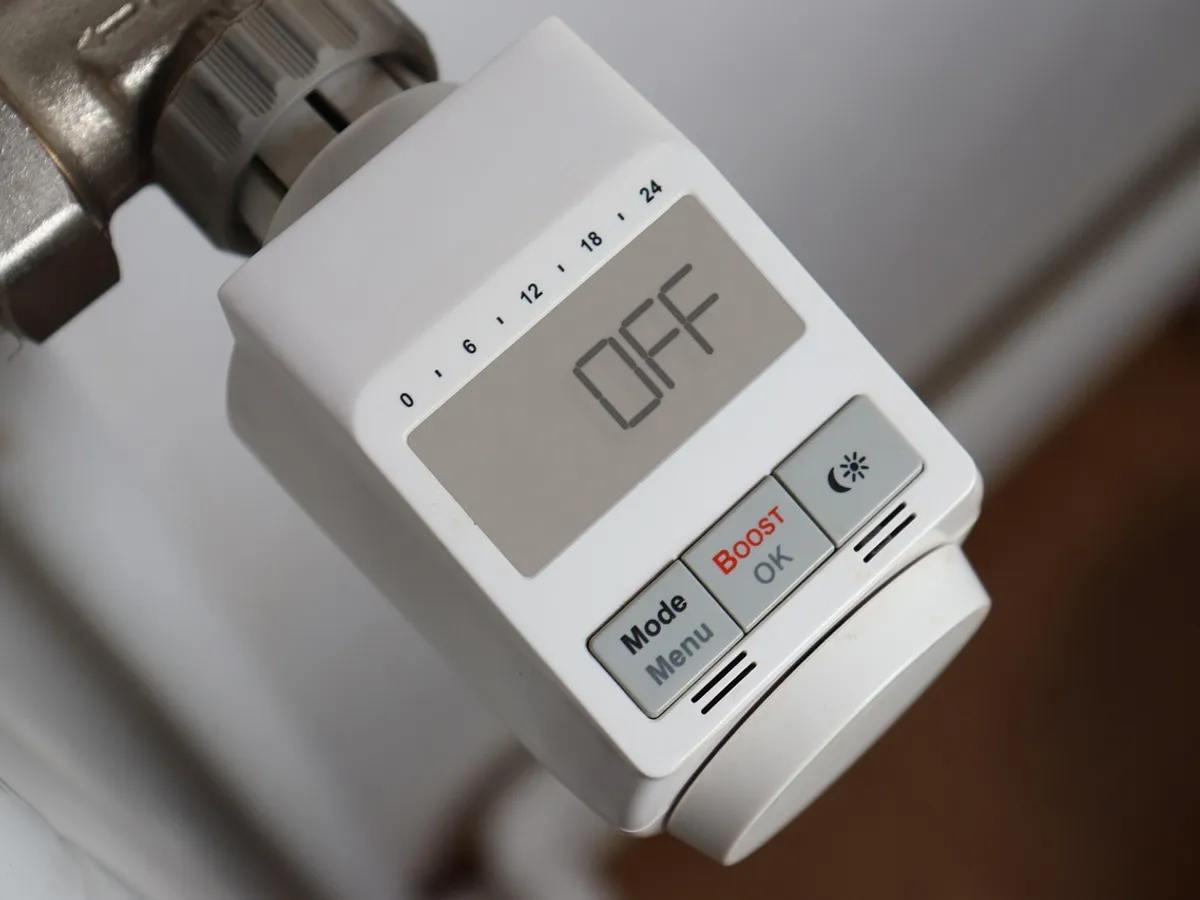
Setting back the thermostat while the house is empty or asleep saves real money in a gas-heated home. A few degrees for eight hours, twice a day, compounds across a winter.
Heat pumps need a caution. Deep setbacks can force the auxiliary strips to catch up, and strip heat is expensive enough to erase the savings and then some. Smaller setbacks, or a thermostat that knows what it is controlling, are the better answer.
Either way, pushing the thermostat far past your target does not heat faster. It heats to the wrong number and bills you the difference. Larger institutions in the region have worked through the same arithmetic on much bigger buildings, and the facilities histories behind the University of Mary Washington's local profile and Germanna Community College's local profile show the same lesson at scale: controls and scheduling deliver savings long before new equipment does.
You will reach the equipment question eventually
Once the shell is tight, the attic is deep, and the ducts are honest, replacement becomes a fair conversation rather than a first resort. Two things make it worth having: an aging system with climbing repair costs, or a heat source that is simply expensive to run here.
Insist on a room-by-room load calculation rather than a size picked off square footage. A house that has just been sealed and insulated needs less equipment than it did last year, and oversized equipment short cycles, dehumidifies poorly in summer, and wears itself out early. From the reader side, the choice often turns on whether the contractor did the math or reached for a rule of thumb.
You want a plan that survives a Fredericksburg winter, not a shopping list
Efficiency here is a sequence, and the sequence is the saving. Seal the air. Deepen the attic. Fix the ducts. Run the thermostat on a schedule that matches the house. Then, and only then, price equipment against a real load calculation.
Do that in order and a hard January stops being an event. The house holds temperature between cycles, floors stay closer to even end to end, and the bill lands roughly where you expected. When the work moves past caulk and a tape measure into gas, refrigerant, or duct redesign, that is the line, and it is worth calling a licensed local contractor such as Robert B. Payne rather than improvising above a ceiling you cannot see. Doing the cheap work first is not a compromise. It is what makes the expensive work smaller.
A comfortable home isn't the biggest system — it's the right one, cared for well.
From the editors